
Services / K9 China
Sourcing support, shaped around your product.
From describing what you need to checking the result and planning the shipment, each service answers a different question on the way from idea to delivered goods.
The bigger picture
What a sourcing partner actually does.
A supplier conversation, a sample, an inspection and a shipment are not separate tasks. Each one only works if the step before it left clear information behind.
The services on this page organize that information: they turn your requirements into questions worth asking, keep the answers in order, and prepare the checks and handovers that follow. You stay in control of every decision — the detail work between the decisions is where we help.
The services
Six areas, one connected process.
Use one, or combine them across a project. Each section below explains what it covers in practice.
Product sourcing & brief development
Turn an idea, sketch or reference item into a brief a supplier can quote against.
What it coversSupplier communication
Ask the right questions, in the terms production teams think in, and bring structured answers back.
What it coversSample coordination
Arrange samples, compare them against the brief and record the feedback for the next round.
What it coversQuality control
Define product-specific checkpoints and check the result against them at the moments that matter.
What it coversLogistics & consolidation
Packaging, labeling, destination planning and combining goods from more than one source.
What it coversChina business support
Practical local context for visits, planning cycles, documents and the questions around working with China.
What it covers01 — Brief development
A brief that answers questions before they are asked.
We work from whatever you have — a sketch, a photo of a comparable item, or just a description of what it should do — and turn it into a document that states the material, dimensions, finish, packaging and purpose in plain terms. When something is undecided, it is written down as undecided, so it can be resolved deliberately rather than by assumption.
- Translate rough ideas into specific, quotable requirements
- Flag details that are missing or open to misinterpretation
- Prepare reference drawings, images and comparison notes
- Keep one agreed version as changes happen


02 — Supplier communication
Ask in the terms the factory thinks in.
A requirement can shift meaning between languages and between trading intermediaries. We put the questions directly, in the vocabulary production teams use, and bring back answers that are specific enough to act on — not a summary of general willingness. Trade-offs like tooling cost, lead time and alternatives are surfaced openly so the decision stays yours.
- Raise feasibility, tooling and minimum order questions early
- Confirm material and process choices in writing
- Surface trade-offs: cost, lead time, tooling, alternatives
- Keep your priorities visible in every exchange
03 — Sample coordination
Judge the sample against the brief, not against hope.
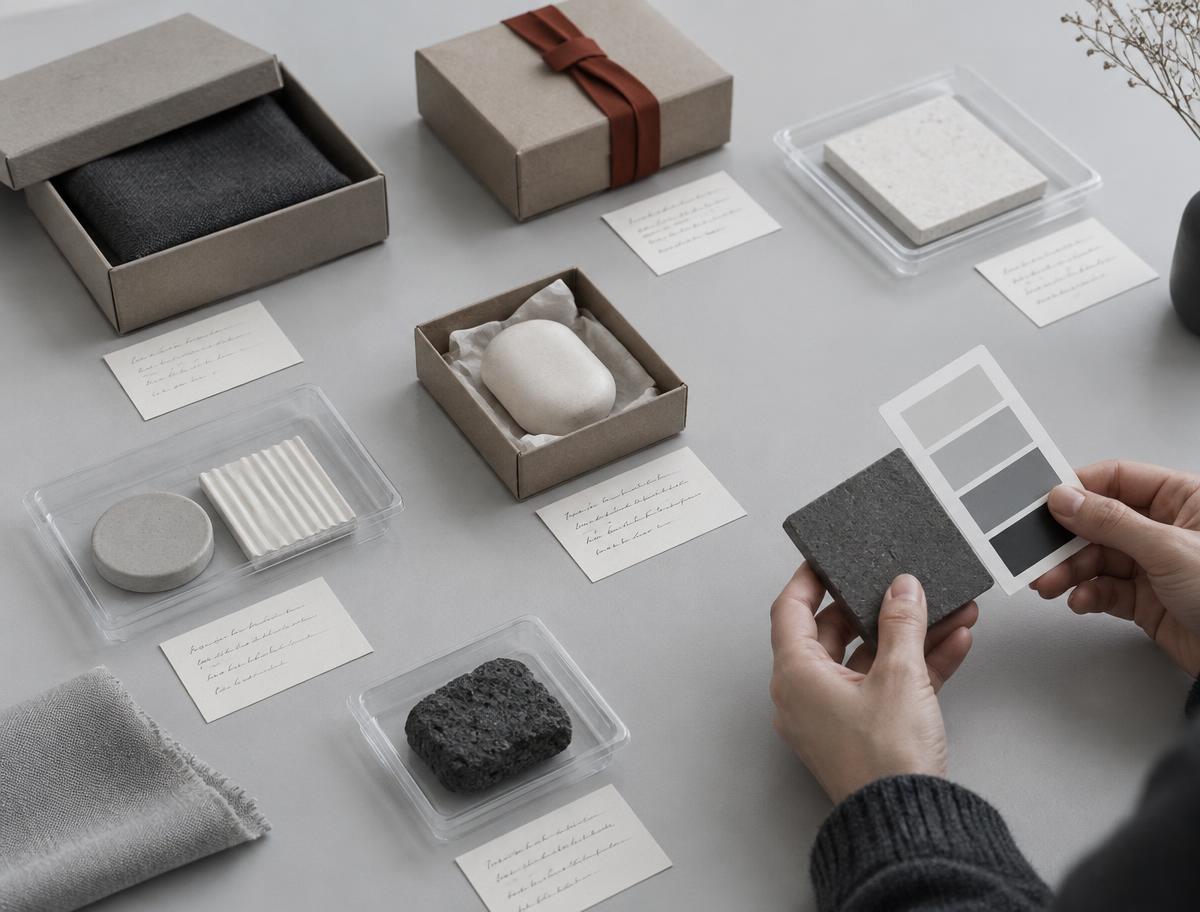
A sample review records what matches the requirement, what does not, and what needs another round of clarification. We coordinate the samples, place them side by side with the brief and reference items, and organize the feedback into a form production can act on. A sample is a checkpoint, not a guarantee about a later production run — the review is where that difference is kept visible.
- Coordinate sample production and shipping
- Compare samples against the brief and reference items
- Record measurable feedback for the next round
- Track revisions until the final sample is the agreed one
04 — Quality control
Inspect against criteria, not assumptions.
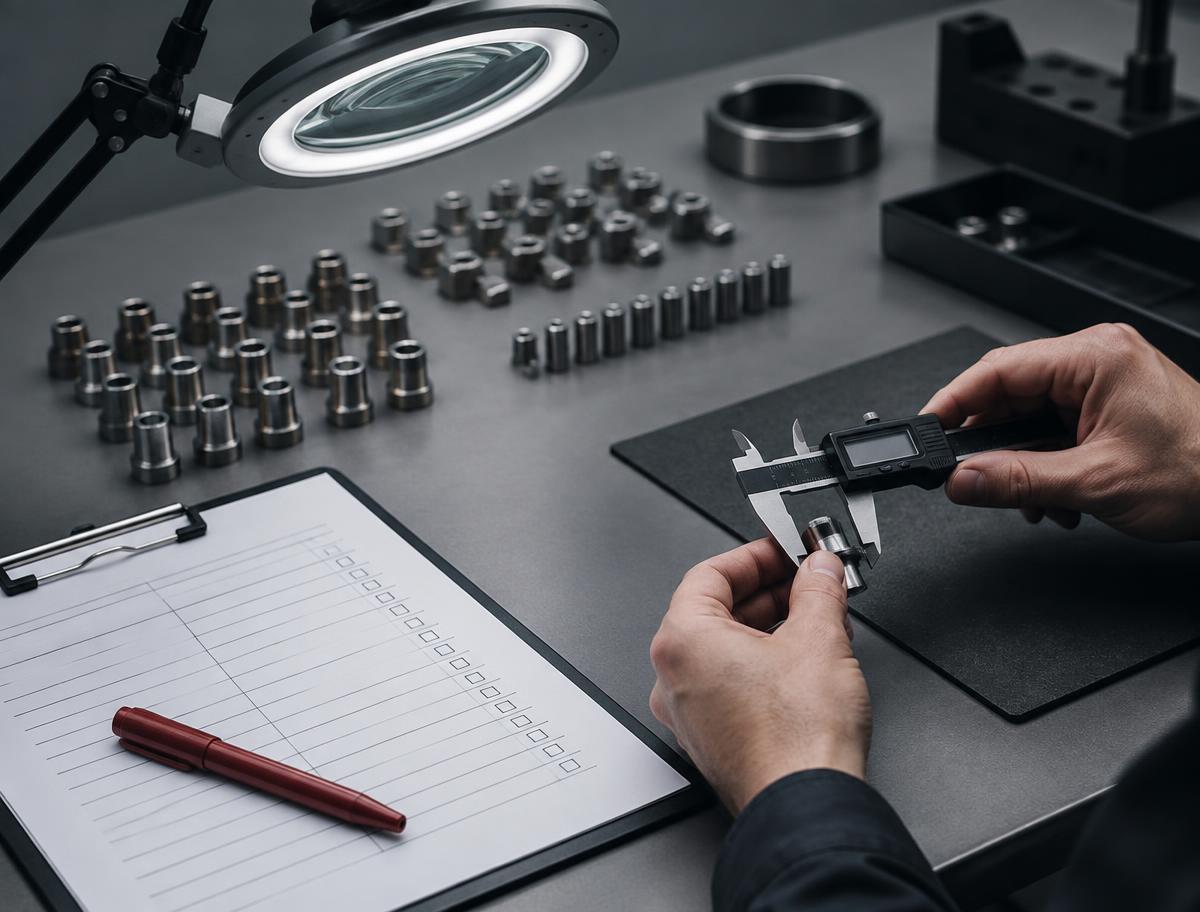
An inspection is only useful when the check points were agreed in advance. Depending on the item and the stage of production, that can include measurements, function, appearance, labeling and packaging — written down before production finishes, not after. Findings are then reported against those criteria, so what needs attention is described rather than guessed.
05 — Logistics & consolidation
The last step deserves the same planning as the first.
A well-made product still needs the right packaging and a clear destination plan. Carton protection, inner boxes, labels, document requirements and whether separate items should travel together are discussed before shipment arrangements are made — and when goods come from more than one source, consolidation is planned so they arrive as one order.
- Carton protection, inner boxes and labeling
- Destination and document requirements
- Combining items from more than one source
- A handover plan agreed before cartons are closed


06 — China business support
Working with China, with the context explained.
Beyond a single order, practical questions come up: how production calendars and local holidays shape timing, what documents a shipment involves, how a visit is arranged and what it is worth seeing. We can be the practical counterpart for those questions, so decisions rest on local context rather than assumptions.
- Practical context for planning and timing
- Support preparing visits and meetings
- Help understanding documents and procedures
- A counterpart for questions as they come up
Working together
How a project usually runs.
The scope is agreed per project — small questions get small answers, full projects get full coordination.
Share the brief
What you need, roughly how many and where it is going. An estimate is enough to begin.
Agree the scope
Which of the services this project needs — and just as importantly, which it does not.
We coordinate
Communication, samples, checkpoints and shipment planning, handled between you and the work.
You decide
Every choice — supplier, sample, change, shipment — is presented to you and stays yours.
Pricing
How much does a sourcing agent cost?
Every project is different, so we quote case by case. The first call is free: we learn what you need, then send a quote based on the scope — the products, the number of suppliers, the inspections and the shipping involved.
- Free first call
- Quote based on your project scope
- No obligation until you approve the quote
Answers to common questions
Services FAQ
Every project is scoped individually. These answers cover the most common starting points.
Can I use only part of the services?
Yes. Projects can start with a brief alone, an inspection of a specific order, or a single question that needs answering. The scope is agreed per project.
Do you work with specific factories?
The site does not publish supplier identities, contacts or terms. What can be shared about a project is discussed with you directly as part of the scope.
How are the services priced?
Each project is scoped individually, so pricing depends on what the project involves. The enquiry is the natural place to start that conversation.
Do you inspect every order?
Inspection is one of the services, chosen when the project calls for it. What gets checked, when, and against which criteria is agreed with you in advance.
Can you help if I only have an idea?
Yes. A sketch, a photo of a similar item or a plain description is enough to start building a brief — a finished specification is not required.
Are the products shown on the site available to order?
The images and examples are illustrative. They do not confirm stock, availability, price or any particular production arrangement.
Will submitting the enquiry contact K9 China now?
Yes. Once you review and send the enquiry, it reaches the K9 China team and you receive a reference number.
The next step
Start with the part you already know.
Describe your items and requirements, review them, and send your enquiry.