
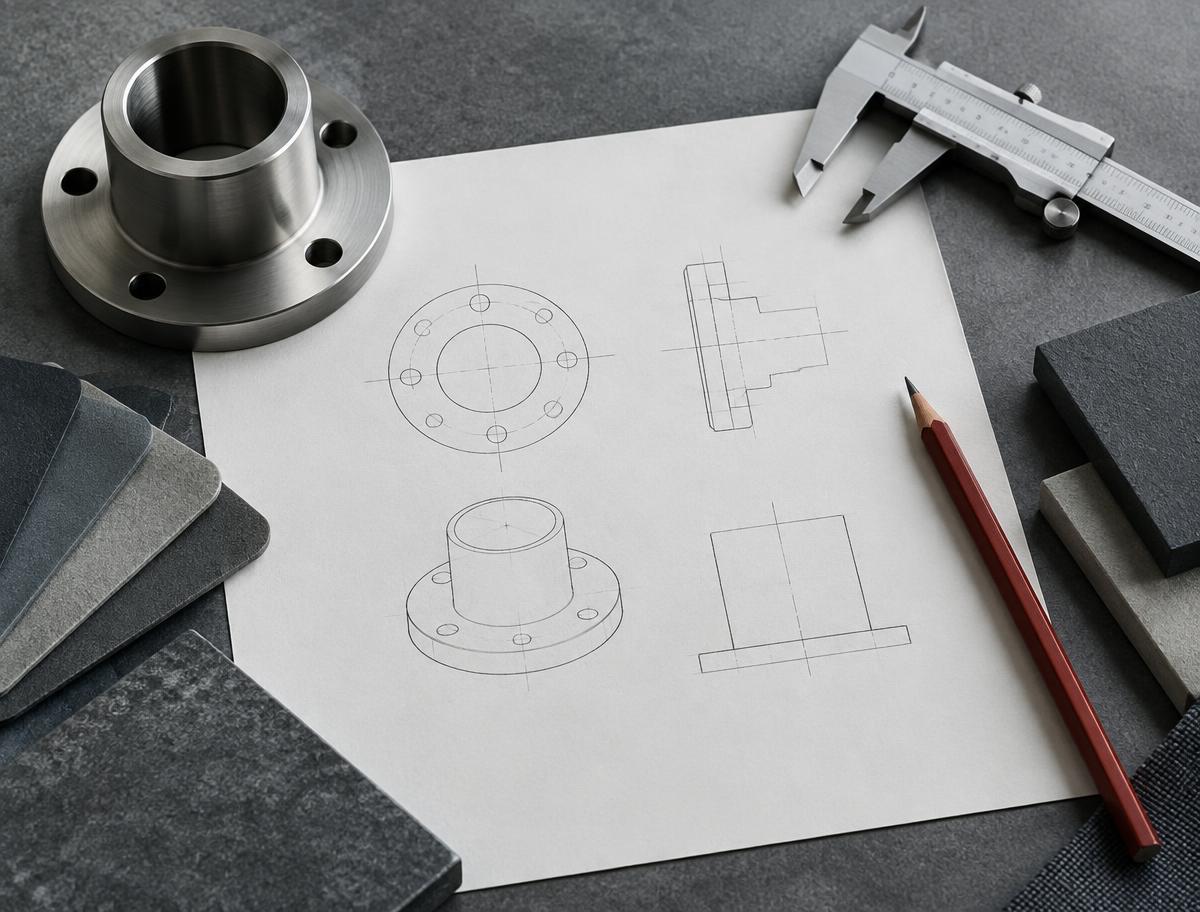
A good product brief does not need to be a polished engineering document. It needs to describe what matters, show what is still undecided, and give everyone the same reference point.
The short version
Start with what the product must do. Separate confirmed requirements from preferences and open questions, then attach a reference for anything that is hard to describe.
01 / 04
Begin with the job the product has to do
Before dimensions or materials, describe how the item will be used. Is it handled every day, installed outdoors, shipped as a kit, or placed inside another product? The answer gives context to the choices that follow.
If you have a reference item, explain what you want to keep and what you want to change. 'Like this, but lighter' is useful only when the parts of 'this' are identified.
- Primary use and intended environment
- Who will handle or install it
- What a successful result must achieve
02 / 04
Make the important details measurable
Record dimensions, tolerances, material, color, finish and any functional requirements you already know. A dimension without a unit or a finish without a reference can mean different things to different people.
Not every detail has to be final on day one. Label an estimate as an estimate and mark decisions that need to be made after a sample. That is more helpful than filling a blank with a guess.
- Dimensions and acceptable variation
- Material and surface finish
- Function, fit and appearance criteria
- Known standards or testing requirements, if applicable
03 / 04
Include quantity, packaging and destination
An approximate quantity helps frame the conversation even if the final number changes. Describe whether the item needs individual protection, retail packaging, assembly instructions or specific labeling.
The destination matters too. An item that travels a long distance may need different protection than one moved locally. Any destination-specific requirements should be confirmed for the actual product and market, not assumed from a generic checklist.
04 / 04
Keep one agreed version
A brief becomes useful when it is the document everyone checks. Give each revision a clear version, record what changed, and keep the latest sample feedback alongside the requirement it refers to.
A short list of unresolved questions at the end is a strength, not a weakness. It shows exactly what needs answering before decisions move forward.
- Current version and date of revision
- Approved requirements versus open questions
- Reference photos, sketches or sample notes