
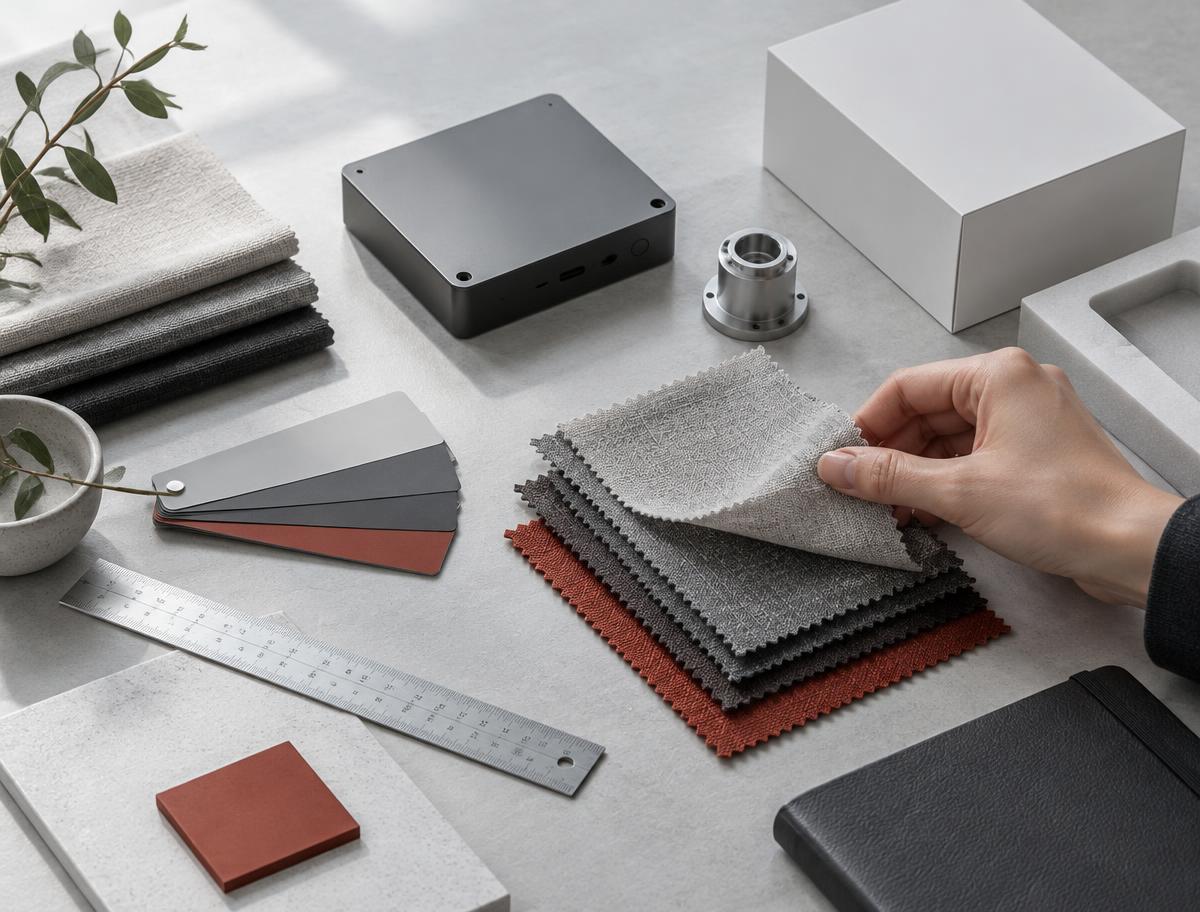
A sample can reveal more in a few minutes than a long exchange of descriptions. But it only helps if the review produces specific, shareable feedback.
The short version
Compare the sample against the brief, not against memory. Record what passed, what needs changing, and what must be checked again later.
01 / 03
Review against a reference, not an impression
Put the sample beside the latest agreed brief, drawing or reference item. Walk through each important requirement in the same order every time. This makes it easier to distinguish a genuine mismatch from a preference that was never written down.
Look beyond appearance. How does the item feel in use? Does it fit with related parts? Is the finish consistent on less-visible surfaces? Would its packaging protect it during transit?
- Dimensions and fit
- Material, color and finish
- Function and handling
- Packaging and presentation
02 / 03
Turn reactions into actionable feedback
'The edge feels wrong' starts a conversation; 'the edge should be rounded to match the approved reference' tells someone what to change. Photograph the relevant area, identify the issue and describe the desired result.
Keep comments tied to the sample version. If there are multiple variations, label them clearly so feedback cannot be applied to the wrong one.
03 / 03
Know what the sample does not prove
A sample can help confirm design intent, materials and finish. It does not on its own confirm that a later production run will match it. That is why the accepted sample and written requirements should remain available as references for quality checks.
If a change is made after approval, revisit the affected criteria. A small adjustment in material or construction may have consequences elsewhere.
- Keep the approved sample as a reference
- Record changes after approval
- Plan production checks against the same criteria